Despite advances in automation, machinery, and digital systems, many workplace incidents still share a common root cause: human behavior. Equipment failures and environmental conditions matter, but in most cases, the final outcome is determined by the decisions people make—whether procedures are followed, risks are recognized, or warnings are ignored.
High-risk industries such as aviation, nuclear power, oil and gas, and large-scale manufacturing recognized this reality decades ago. As a result, they have evolved beyond traditional safety programs and adopted technology-enabled, behavior-focused safety models. These approaches combine human factors science, data analytics, and digital tools to proactively reduce risk.
Today, as organizations across sectors undergo digital transformation, these lessons are more relevant than ever. Technology is no longer just a productivity enabler—it has become a powerful tool for shaping safer behaviors, improving situational awareness, and strengthening safety culture.
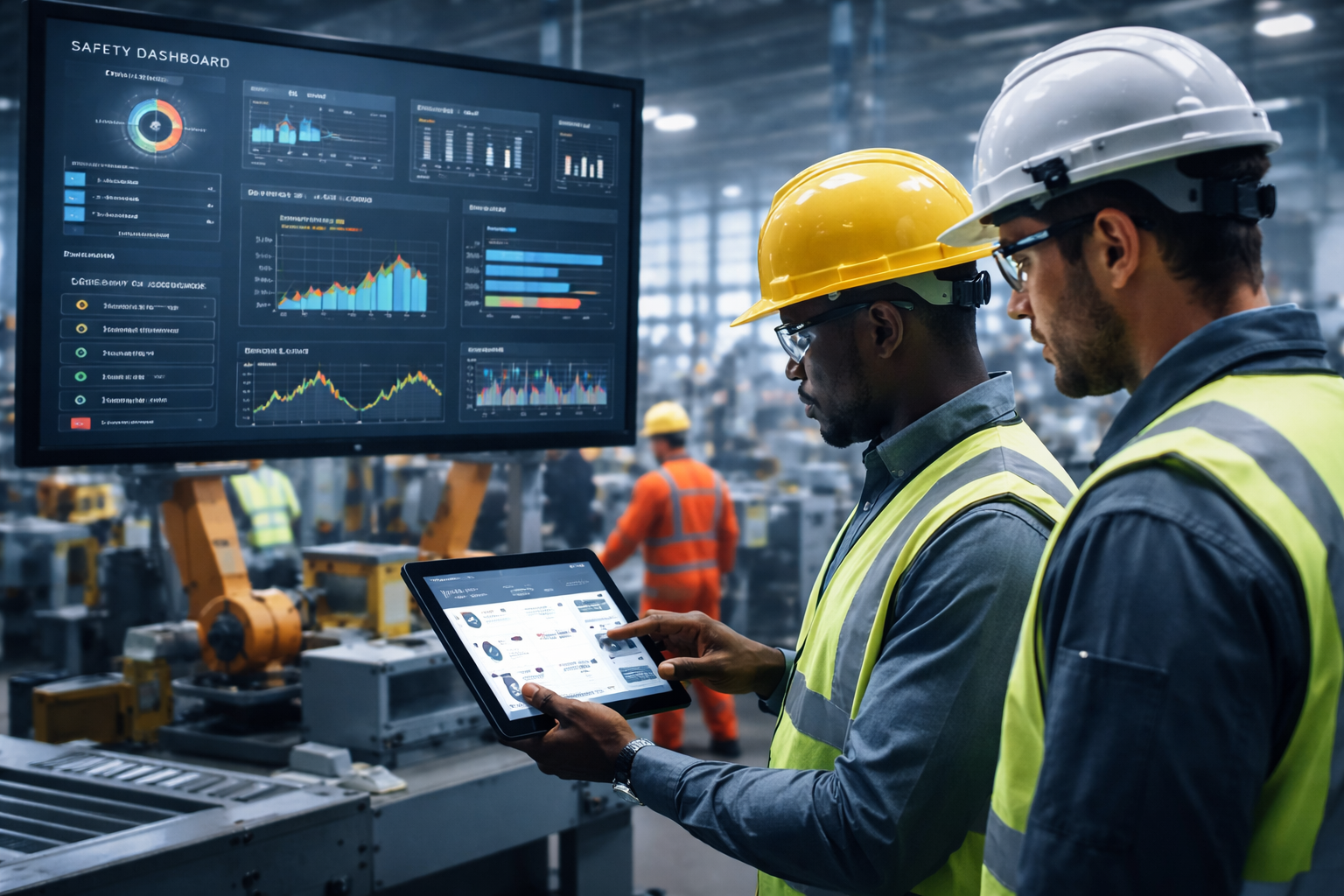
From Reactive Safety to Predictive, Data-Driven Prevention
Traditional safety programs are largely reactive. They rely on lagging indicators such as incident reports, injury rates, and audit findings. While these metrics are useful, they only tell organizations what went wrong after harm has already occurred.
Modern safety systems, enabled by digital technologies, focus on leading indicators—signals that reveal risk before an incident happens. This shift mirrors the broader movement toward predictive analytics seen in maintenance, supply chain, and quality management.
Digital safety platforms allow organizations to:
- Capture behavioral observations in real time using mobile devices
- Aggregate data across sites, teams, and shifts
- Identify patterns and emerging risks using analytics
- Trigger early interventions before incidents occur
This transition from hindsight to foresight fundamentally changes how safety is managed.
Proactive Observation and Feedback, Powered by Digital Tools
A cornerstone of behavior-based safety is structured observation and feedback. In high-risk industries, trained observers—often peers—monitor work as it is performed, documenting both safe and at-risk behaviors.
Technology significantly enhances this process.
Instead of paper-based checklists, organizations now use:
- Mobile safety observation apps
- Wearable-enabled checklists
- Cloud-based EHS platforms
Observers can quickly record observations, add contextual notes, and submit data instantly. This creates a centralized repository of behavioral data that can be analyzed at scale.
Key benefits of technology-enabled observation programs include:
- Standardization
Digital checklists ensure consistent criteria across locations and teams, reducing subjectivity. - Real-time feedback
Observations can trigger immediate alerts or coaching prompts, reinforcing safe behaviors when they matter most. - Trend analysis
Analytics dashboards reveal recurring unsafe behaviors, high-risk tasks, or locations with elevated exposure. - Organizational learning
Data is anonymized and aggregated to improve systems rather than assign blame.
By combining human insight with digital visibility, organizations turn everyday work activities into powerful safety intelligence.
Simplifying Procedures Through Digital Design
Complex or poorly written procedures are a well-known contributor to human error. Under time pressure or fatigue, workers are more likely to skip steps or improvise when instructions are unclear.
High-reliability organizations address this problem by using technology to simplify, visualize, and contextualize procedures.
Examples include:
- Digital standard operating procedures (SOPs) accessible on tablets or mobile devices
- Step-by-step workflows embedded directly into operational systems
- Visual job aids with images, videos, or augmented reality overlays
- Context-aware instructions triggered by equipment status or task type
The aviation industry’s checklist philosophy has inspired digital equivalents across industrial sectors. Instead of relying on memory or printed manuals, workers receive clear, task-specific guidance at the point of use.
Equally important is involving frontline employees in the digital design process. Their feedback ensures that procedures reflect real-world conditions rather than theoretical assumptions. When workers see that systems are built with them, not for them, compliance increases naturally.
Building a Just Culture with Transparent Reporting Systems
One of the most significant cultural shifts in high-risk industries has been the adoption of a just culture—an environment where people feel safe reporting errors, near misses, and hazards without fear of punishment.
Technology plays a crucial role in enabling this openness.
Modern reporting platforms allow employees to:
- Submit near-miss reports anonymously if needed
- Attach photos or videos to provide context
- Report hazards quickly via mobile devices
- Track the status of reported issues and corrective actions
This transparency builds trust. When employees see that reported concerns lead to real improvements, participation increases.
Consider a digitally enabled manufacturing facility that notices a spike in near-miss reports related to a specific machine. Analytics reveal that workers are routinely bypassing a safety guard to maintain productivity. Instead of disciplining individuals, leadership investigates the root cause and discovers a poor ergonomic design. The guard is redesigned using operator input, eliminating the unsafe workaround.
Without a non-punitive, technology-supported reporting system, this risk would likely have remained hidden until a serious injury occurred.
Leadership Visibility in the Digital Age
Leadership commitment remains a defining factor in safety performance. However, in today’s distributed and remote-friendly work environments, visibility requires more than physical presence.
Technology extends leadership influence beyond traditional boundaries.
Effective leaders now:
- Participate in digital safety dashboards and reviews
- Conduct virtual safety walks using live video tools
- Communicate safety priorities through internal platforms
- Use data-driven insights to guide decision-making
When leaders consistently reference safety metrics alongside productivity and financial performance, it reinforces the message that safety is a core organizational value—not a competing priority.
Crucially, digital systems also hold leadership accountable. Safety performance becomes measurable, visible, and transparent across all levels of the organization.
Integrating Advanced Technologies for the Next Level of Safety
As organizations mature in their digital journey, advanced technologies further strengthen human-centered safety programs.
These include:
- Artificial intelligence and machine learning to detect behavioral patterns and predict risk
- Computer vision systems to identify unsafe actions in real time
- Wearables and sensors to monitor fatigue, posture, or exposure
- IoT-enabled equipment that provides contextual safety alerts
These technologies are not intended to replace human judgment. Instead, they act as decision-support systems, augmenting awareness and enabling timely intervention.
When deployed ethically and transparently, they reinforce trust rather than surveillance, empowering workers to make safer choices.
Applying These Principles Across Industries
Adopting technology-enabled safety practices does not require a complete overhaul of existing programs. It begins with a mindset shift—from reactive compliance to proactive risk management.
Organizations can start by:
- Digitizing observation and reporting processes
- Simplifying procedures using visual and interactive tools
- Encouraging open reporting through non-punitive systems
- Using data to guide leadership actions and investments
Over time, these incremental changes create a safer, more resilient operation where technology and human behavior work together rather than in isolation.
Conclusion: Technology as an Enabler of Safer Behavior
Safety excellence is no longer achieved through rules alone. In a complex, fast-paced operational environment, organizations must leverage technology to understand, support, and influence human behavior.
By combining behavioral science with digital tools, organizations can move beyond accident prevention toward predictive, adaptive, and people-centered safety systems. These changes help in improving worker behavior for better safety and lead to a more resilient and productive operation.