If you’ve ever stood next to a traditional workshop where windows are cut, shaped, and assembled by hand, you know it’s a blend of craftsmanship and sweat. The smell of sawdust, the whir of saw blades, and the occasional clatter of dropped frames remind you that every piece is the result of human touch. But fast forward to today’s large-scale production floors, and the picture looks different. Machines hum in carefully choreographed rhythms, robots lift frames with ease, and computer-controlled cutters glide with accuracy down to fractions of a millimeter.
Window manufacturing has become a fascinating intersection of age-old building needs and cutting-edge technology. Central to this transformation are CNC (computer numerical control) systems and robotics. Together, they’ve changed the pace, precision, and possibilities of the industry.
Why Precision Matters More Than Ever
A window may look simple, but anyone in construction or manufacturing knows it’s not. Frames need to fit squarely, seals have to line up, and glass panes must sit perfectly without gaps. Even small deviations in cutting or drilling can cause air leaks, water ingress, or costly rework.
Customers today also expect higher performance. Energy-efficient glazing, advanced insulation standards, and custom architectural designs demand tighter tolerances than ever before. The “close enough” approach that worked in older workshops just doesn’t cut it in modern projects.
That’s where CNC and robotics shine. They deliver consistency across hundreds or thousands of units, something no manual process can achieve at scale.
CNC: The Digital Master Craftsman
Think of CNC machines as digital master craftsmen. They take design files—whether simple rectangular frames or complex geometries for curved windows—and translate them into precise tool paths. With CNC, drilling, cutting, milling, and routing all follow exact digital instructions. For manufacturers investing in precision, choosing the right CNC machining center is critical. High-quality machines not only deliver accuracy but also provide the flexibility to adapt quickly to custom orders or shifts in demand.
Instead of relying on manual measurement, CNC equipment works from CAD (computer-aided design) data. That eliminates human error, shortens setup time, and allows for rapid changes in production. Want to switch from a batch of standard windows to custom arched frames? With CNC, it’s just a matter of adjusting the program.
The benefits go beyond accuracy:
- Speed: Multiple operations like drilling hinge holes and routing grooves, happen in one setup.
- Repeatability: Every frame matches the design, frame after frame.
- Flexibility: Machines handle both large-volume runs and one-off specialty orders.
In practical terms, this means fewer rejects, faster throughput, and the ability to meet diverse customer needs without slowing production.

Robotics: More Than Just Heavy Lifters
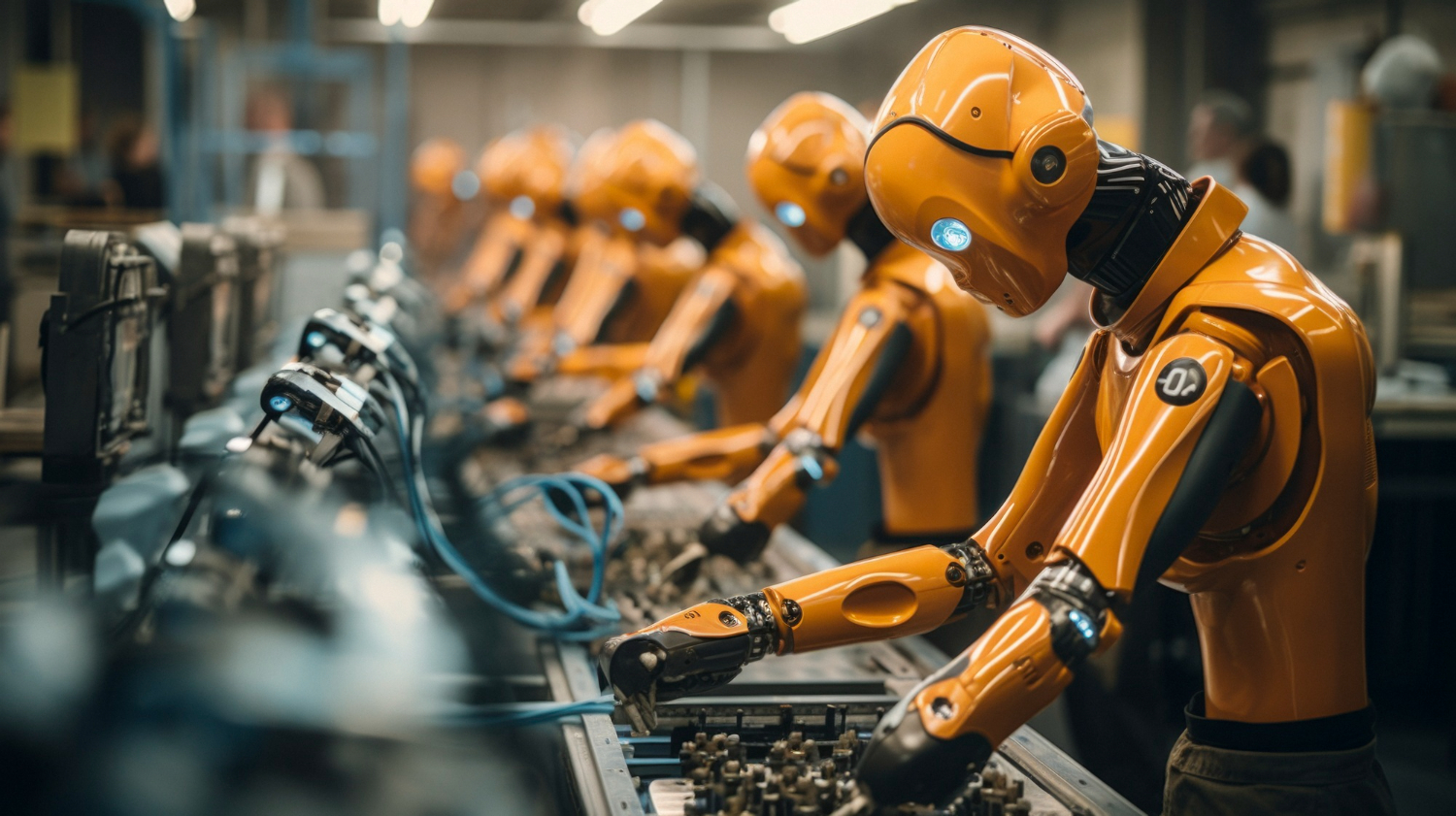
If CNC handles the cutting and shaping, robotics often takes over the handling and assembly. Modern factories use robotic arms to lift heavy frames, position glass panels, apply sealants, and even perform welding or screwing tasks.
Robots excel in repetitive, labor-intensive work where precision and consistency are vital. For instance, inserting glass panels into frames requires careful placement to avoid cracks or gaps. A robotic system can repeat that motion thousands of times with the same accuracy, something that fatigued human operators might struggle to maintain.
Beyond handling, robotics also improves worker safety. Instead of lifting awkward, heavy frames, employees can oversee robotic systems, reducing physical strain and the risk of injury. It’s not about replacing human skills, but rather shifting them to more value-added tasks, such as programming, quality control, or process optimization. Read more about Humanoid Robots.
The Marriage of CNC and Robotics
Where things get truly interesting is when CNC and robotics work in tandem. A CNC machine might cut and drill a window frame to exact specifications, then a robotic arm transfers it seamlessly to the next station for glazing or finishing.
This integration minimizes handling errors, keeps production flowing smoothly, and allows for near-continuous operation. In some plants, the entire line from raw material input to finished window assembly is automated, with human oversight ensuring quality and troubleshooting when needed.
The result is not just faster production but a more predictable one. Lead times shrink, supply becomes more reliable, and customers benefit from windows that consistently meet performance expectations.
Quality Control: Smarter and Faster
Automation does more than just make things faster. It also raises the bar for quality control. Advanced CNC machines now include sensors that monitor tool wear, detect deviations in cutting, or even adjust in real time. Robotics systems can be paired with vision technology to check for defects in seals, alignment, or surface finish.
This automated inspection catches problems earlier in the process, reducing waste and rework. For manufacturers, that means tighter margins, fewer warranty claims, and stronger customer trust.
The Human Side of Automation
It’s easy to talk about machines and forget about people, but automation changes the nature of work on the factory floor. Instead of spending hours cutting profiles or manually fitting frames, workers are now more likely to be programming machines, supervising production lines, or interpreting quality data.
That shift requires training, but it also creates opportunities. Skilled technicians who understand both the craft of window making and the logic of CNC or robotics are in high demand. For many companies, investing in automation goes hand in hand with investing in their workforce.
Some might ask, does this mean fewer jobs? The reality is more nuanced. While robots may handle repetitive physical tasks, humans are still needed to program, maintain, and optimize the systems. And as demand for custom, high-performance windows grows, so does the need for people who can combine technical know-how with problem-solving.
Looking Ahead
Automation in window manufacturing is not slowing down. As sustainability standards rise and customers demand ever-more precise, customized solutions, CNC and robotics will continue to evolve. We’re already seeing advances such as AI-assisted programming that speeds up design-to-production, or collaborative robots that work safely side by side with human operators.
The direction is clear: greater precision, greater efficiency, and greater ability to deliver what the market wants. For manufacturers, the question is less about whether to adopt these technologies and more about how quickly they can be integrated into existing processes.
Final Thought
Windows may seem like simple rectangles of glass and frame, but the technology behind their production tells another story. CNC and robotics have turned window manufacturing into a sophisticated, highly precise process where errors are minimized and possibilities expanded.
The end result is not just straighter cuts or cleaner joints. It is windows that fit better, last longer, and meet the rising expectations of builders and homeowners alike. And for manufacturers, that means staying competitive in a market that values both craftsmanship and consistency.
Read about Integrating Robotic Systems with Laser Welding for Precision.