Customer Relationship Management systems are at the core of modern financial advisory services. They store and manage highly sensitive client information such as personal identification details, financial records, transaction history, and investment portfolios. Because of the value and sensitivity of this data, CRM platforms have become a primary target for cybercriminals.
CRM data breaches can lead to severe financial losses, regulatory penalties, and long-term damage to client trust. Preventing such breaches requires a structured and proactive approach that goes beyond basic security measures. It involves implementing strong access controls, securing data through encryption, training employees, continuously monitoring systems, and ensuring compliance with industry regulations.
This guide provides a detailed breakdown of CRM security best practices that financial advisors and organizations can adopt to strengthen their data protection strategy and minimize cybersecurity risks.
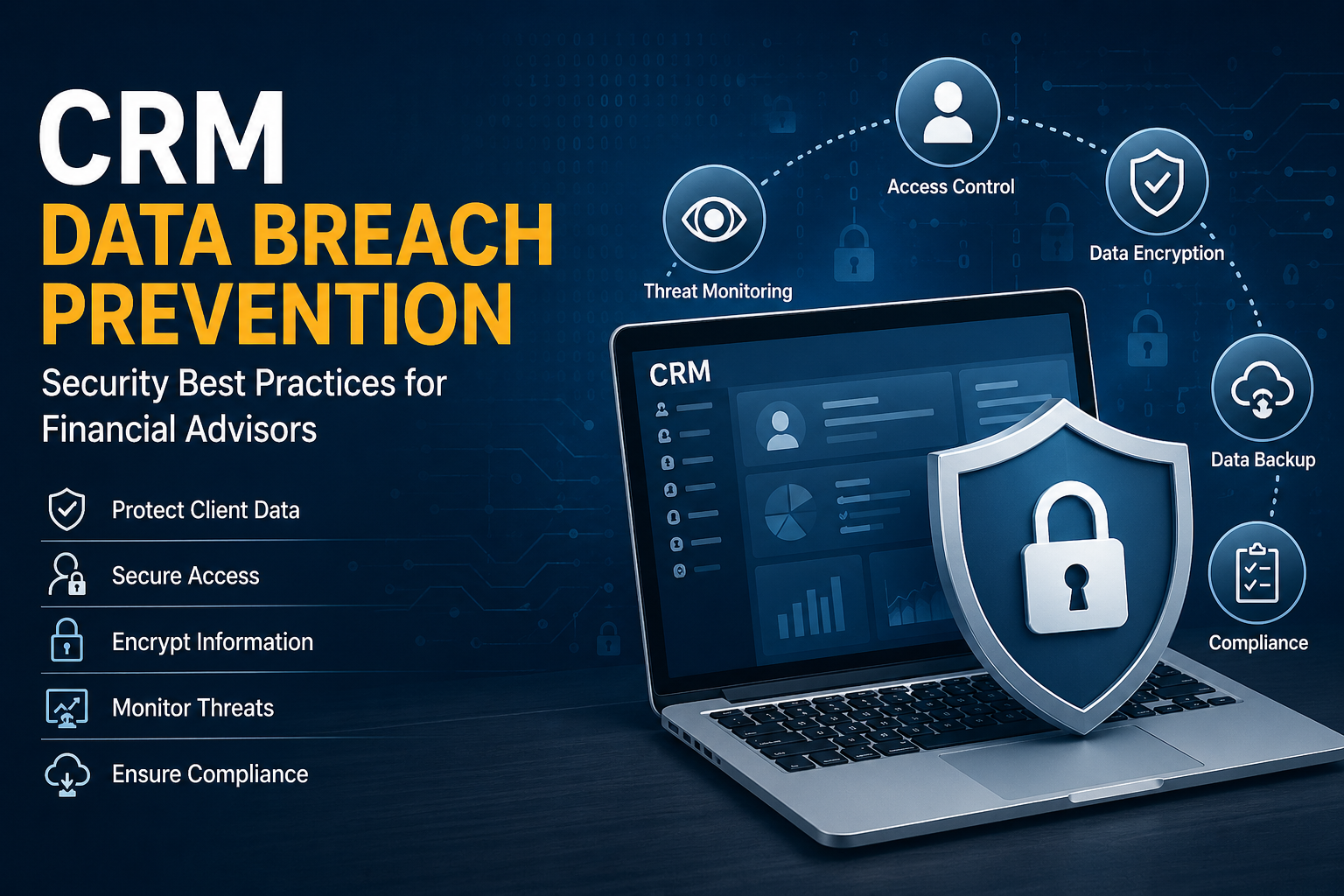
Why CRM Data Breach Prevention Matters
Financial institutions and advisory firms handle large volumes of confidential data every day. A single vulnerability in a CRM system can expose thousands of records, making it critical to implement strong preventive measures.
Key risks associated with CRM data breaches include:
- Unauthorized access to sensitive client data
- Financial fraud and identity theft
- Legal and regulatory penalties
- Loss of customer trust and brand reputation
- Business disruption due to ransomware or system failure
By focusing on CRM data breach prevention, organizations can build a resilient security framework that protects both business operations and client relationships.
CRM Security Best Practices Checklist
Before diving into detailed explanations, here is a quick overview of essential CRM security best practices:
- Enable multi-factor authentication for all users
- Implement role-based access control
- Encrypt sensitive data at rest and in transit
- Keep CRM software and dependencies updated
- Train employees on cybersecurity awareness
- Monitor systems continuously for suspicious activity
- Maintain regular and secure data backups
- Ensure compliance with data protection regulations
The following sections explain each of these practices in detail.
Implement Strong Access Controls
Access control is the foundation of CRM security. It ensures that only authorized individuals can access specific data and system functionalities.
Organizations should adopt role-based access control, where permissions are assigned based on job responsibilities. This approach limits exposure by ensuring employees can only access the data necessary for their role.
Key practices include:
- Define user roles clearly based on responsibilities
- Apply the principle of least privilege to restrict unnecessary access
- Regularly review and update user permissions
- Immediately revoke access for employees who leave the organization or change roles
Multi-factor authentication should also be enforced for all users. This adds an extra layer of protection by requiring additional verification beyond passwords, such as a one-time code or biometric authentication.
By strengthening access control mechanisms, organizations can significantly reduce the risk of unauthorized data access.
Use Advanced Data Encryption
Encryption plays a critical role in protecting sensitive information within CRM systems. It ensures that even if data is intercepted or accessed without authorization, it cannot be easily read or misused.
There are two primary areas where encryption should be applied:
- Data at rest, which includes information stored in databases and storage systems
- Data in transit, which includes information transferred between systems, APIs, and user interfaces
Best practices for encryption include:
- Use strong encryption standards such as AES-256 for stored data
- Secure communications using TLS protocols
- Regularly rotate encryption keys to minimize risk
- Store encryption keys securely using key management systems
Proper encryption ensures that sensitive data remains protected even in the event of a breach.
Keep CRM Software Updated
Outdated software is one of the most common causes of security vulnerabilities. Cyber attackers often exploit known weaknesses in older versions of software to gain access to systems. Having access to timely updates and security upgrades is a best practice for the best CRM software.
Keeping CRM systems up to date ensures that security patches and improvements are applied regularly.
Important steps include:
- Enable automatic updates where possible
- Monitor vendor announcements for security patches
- Schedule regular updates for all environments including development, testing, and production
- Update third-party plugins and integrations alongside the main CRM system
Maintaining up-to-date software reduces the attack surface and helps protect against emerging threats.
Train Employees on Cybersecurity Awareness
Human error is a leading cause of CRM data breaches. Employees who are not aware of security risks may unintentionally expose sensitive data.
Training programs should be designed to educate employees about common threats and safe practices.
Topics to cover include:
- Identifying phishing emails and malicious links
- Creating and managing strong passwords
- Avoiding the use of unsecured networks
- Handling sensitive data responsibly
- Reporting suspicious activities promptly
Organizations should conduct regular training sessions and simulate real-world scenarios to improve awareness and preparedness.
A well-informed workforce acts as a strong line of defense against cyber threats.
Monitor Systems and Detect Threats Early
Continuous monitoring is essential for identifying and responding to potential security incidents before they escalate.
Modern CRM systems should be integrated with monitoring tools that track user activity and system behavior in real time.
Key monitoring practices include:
- Track login attempts and detect unusual access patterns
- Monitor data access and modifications
- Set up alerts for suspicious activities
- Analyze system logs regularly
Organizations can also use advanced tools such as intrusion detection systems and security information and event management platforms to enhance visibility.
Early detection allows faster response and minimizes the impact of potential breaches. Learn to how to prevent
Establish Reliable Data Backup Strategies
Data backups are essential for ensuring business continuity in the event of data loss, system failure, or ransomware attacks.
A robust backup strategy should include:
- Regular automated backups to ensure up-to-date data copies
- Storage of backups in multiple secure locations
- Use of both cloud-based and offline backup solutions
- Encryption of backup data for added security
It is equally important to test backup systems regularly to ensure that data can be restored quickly and accurately when needed.
Reliable backups not only protect against data loss but also enable faster recovery from security incidents.
Ensure Compliance with Data Protection Regulations
Compliance with data protection regulations is a critical component of CRM security. Regulatory frameworks provide guidelines for handling, storing, and protecting sensitive data.
Organizations should align their CRM practices with relevant standards such as:
- GDPR for global data protection requirements
- SEBI regulations for financial advisory firms in India
- ISO 27001 for information security management
To maintain compliance:
- Conduct regular security audits and assessments
- Document data handling processes
- Implement policies for data access and retention
- Address identified vulnerabilities promptly
Compliance not only reduces legal risks but also enhances the overall security posture of the organization.
Additional Best Practices to Strengthen CRM Security
Beyond the core practices, organizations can further enhance security by adopting additional measures.
These include:
- Securing API integrations to prevent unauthorized data exchange
- Limiting access from unknown or untrusted devices
- Using network security measures such as firewalls and VPNs
- Implementing data masking for sensitive information
- Performing regular penetration testing to identify vulnerabilities
These additional layers contribute to a more comprehensive and resilient security strategy.
Conclusion
CRM data breach prevention requires a proactive and multi-layered approach that combines technology, processes, and people. Financial advisors and organizations must implement strong access controls, encrypt sensitive data, keep systems updated, and continuously monitor for threats.
Employee awareness, reliable backups, and regulatory compliance further strengthen the overall security framework. As cyber threats continue to evolve, organizations must regularly review and enhance their CRM security practices.
Protecting client data is not a one-time effort but an ongoing commitment. By following these CRM security best practices, organizations can build trust, ensure compliance, and safeguard their systems against potential data breaches.