In today’s digital-first world, businesses rely heavily on stable and secure IT infrastructure to operate efficiently. Even a short period of downtime can lead to significant revenue loss, reduced productivity, and damage to brand reputation. This is where continuous network monitoring becomes essential.
Continuous network monitoring provides real-time visibility into your IT systems, enabling organizations to detect issues early, respond quickly, and maintain uninterrupted operations. Whether it’s identifying performance bottlenecks or preventing cyber threats, this proactive approach plays a vital role in ensuring business continuity.
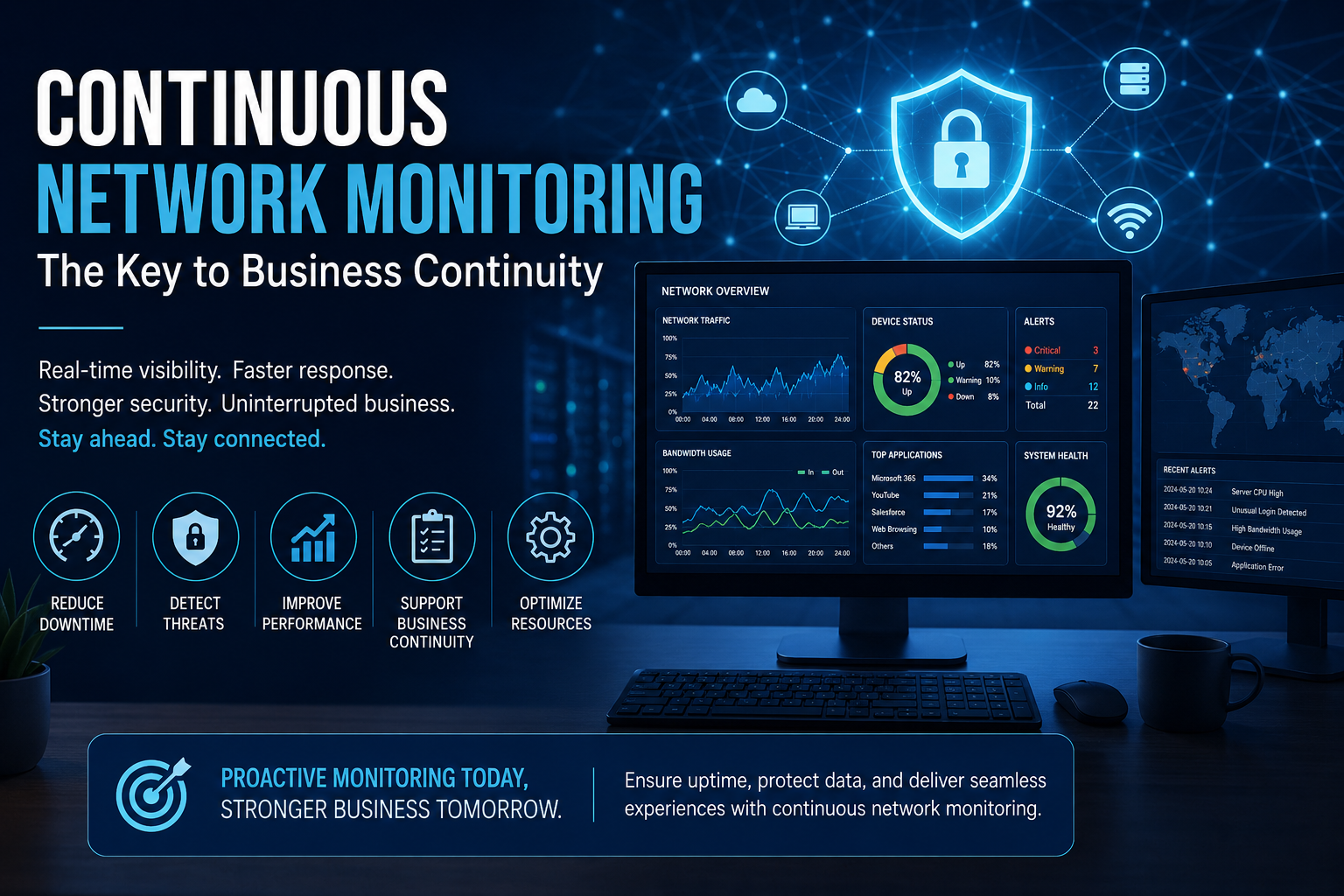
What Is Continuous Network Monitoring?
Continuous network monitoring is the process of constantly tracking and analyzing an organization’s IT infrastructure, including servers, devices, applications, and network traffic.
It helps businesses:
- Detect unusual activity in real time
- Identify performance issues before they escalate
- Monitor bandwidth usage and system health
- Strengthen overall network security
Unlike traditional reactive approaches, continuous monitoring focuses on early detection and prevention, reducing the risk of unexpected failures.
Why Continuous Network Monitoring Matters for Business Continuity
1. Reducing Downtime and Operational Disruptions
Downtime is one of the biggest threats to business continuity. Whether caused by hardware failure, software issues, or cyberattacks, even a few minutes of disruption can have serious consequences.
With real-time network monitoring, IT teams can:
- Identify warning signs before failures occur
- Respond instantly to anomalies
- Minimize service interruptions
According to industry estimates, IT downtime can cost businesses thousands of dollars per minute. Continuous monitoring helps prevent such losses by ensuring systems remain operational.
2. Strengthening Cybersecurity and Threat Detection
Cyber threats are becoming increasingly sophisticated, making proactive security essential. Continuous network monitoring enhances cybersecurity by detecting suspicious activities such as:
- Unauthorized access attempts
- Unusual data transfers
- Malware or ransomware behavior
By identifying threats early, businesses can contain and mitigate risks before they escalate into major security incidents. This not only protects sensitive data but also helps maintain customer trust.
3. Enhancing Network Performance and Efficiency
A well-monitored network doesn’t just prevent failures—it improves overall performance.
Continuous monitoring enables organizations to:
- Identify performance bottlenecks
- Optimize resource allocation
- Improve application responsiveness
As a result, employees experience fewer technical disruptions, leading to higher productivity and better user experience.
4. Enabling Proactive IT Management
Traditional IT management often reacts to problems after they occur. In contrast, continuous network monitoring supports a proactive approach. Managed IT services are used by many organizations to establish and uphold an effective monitoring system
Benefits include:
- Early issue detection and resolution
- Reduced emergency maintenance costs
- Better long-term IT planning
By addressing potential issues before they impact operations, businesses can maintain stability and reduce operational risks.
5. Supporting Business Continuity Planning
Business continuity planning involves preparing for unexpected disruptions while ensuring critical operations continue.
Continuous monitoring plays a key role by:
- Providing real-time system insights
- Helping teams respond quickly during incidents
- Validating the effectiveness of continuity strategies
With accurate data and alerts, organizations can make informed decisions during crises and maintain essential services.
Key Benefits of Continuous Network Monitoring
Implementing continuous network monitoring offers several advantages:
- Real-time visibility into network performance
- Faster incident detection and response
- Reduced downtime and operational risk
- Improved cybersecurity posture
- Optimized resource utilization
- Enhanced user and customer experience
These benefits make it a critical component of modern IT infrastructure management.
Popular Network Monitoring Tools
To implement continuous monitoring effectively, businesses often rely on specialized tools such as:
- Nagios – Open-source monitoring for servers and applications
- Zabbix – Scalable monitoring for networks and cloud environments
- SolarWinds – Comprehensive network performance monitoring
- Datadog – Cloud-based monitoring with real-time analytics
Choosing the right tool depends on your organization’s size, infrastructure, and specific monitoring needs.
Real-World Use Cases
1. E-commerce Platforms
Continuous monitoring ensures websites remain available during peak traffic, preventing revenue loss from downtime.
2. Banking and Financial Services
Real-time monitoring helps detect fraud, secure transactions, and maintain compliance.
3. SaaS Applications
Monitoring ensures high uptime and consistent performance for users across different regions.
4. Healthcare Systems
Hospitals rely on uninterrupted systems for patient care, making monitoring critical for safety and compliance.
Best Practices for Implementing Continuous Network Monitoring
To maximize the benefits of continuous network monitoring, consider these best practices:
- Define clear monitoring goals aligned with business objectives
- Use automated alerts for faster incident response
- Regularly update monitoring tools to handle new threats
- Analyze historical data to identify trends and patterns
- Integrate monitoring with security systems for better protection
A strategic approach ensures your monitoring system remains effective as your business grows.
Conclusion
Continuous network monitoring is no longer optional—it’s a necessity for businesses that rely on digital infrastructure. By providing real-time insights, improving security, and enabling proactive IT management, it plays a crucial role in ensuring business continuity.
Organizations that invest in continuous monitoring are better equipped to prevent downtime, respond to threats, and maintain seamless operations. As technology continues to evolve, adopting a proactive monitoring strategy will be key to staying competitive and resilient.