Pharmaceutical laboratories operate in highly controlled environments where safety, contamination prevention, regulatory compliance, and operational efficiency are critical. While advanced instruments and analytical systems often receive the most attention during laboratory planning, pharmaceutical lab cabinets play an equally important role in maintaining a safe and productive workspace.
Laboratory cabinets are far more than simple storage units. They are essential components of laboratory infrastructure that directly affect chemical safety, workflow organization, contamination control, and regulatory adherence. Choosing the right pharmaceutical lab cabinets helps laboratories improve operational efficiency, reduce hazards, and maintain long-term compliance with industry standards.
Whether setting up a new pharmaceutical laboratory or upgrading an existing facility, understanding the different types of laboratory storage cabinets, materials, safety features, and compliance requirements is essential for making the right investment.
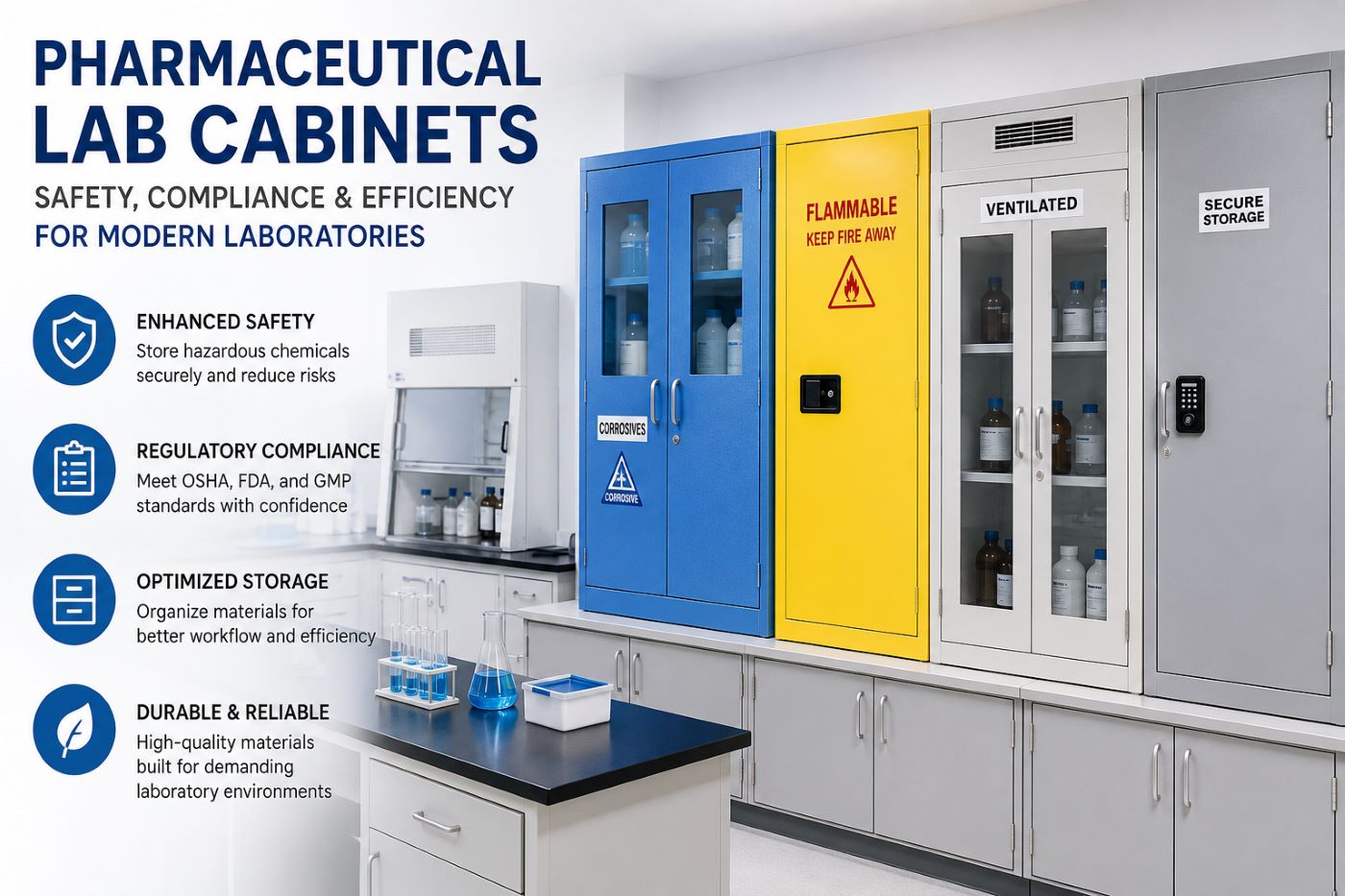
Why Pharmaceutical Lab Cabinets Matter
In pharmaceutical environments, every element within the laboratory must support strict quality and safety standards. Storage systems are no exception. Pharmaceutical lab cabinets are specifically designed to handle sensitive chemicals, laboratory equipment, documentation, controlled substances, and sterile materials while minimizing contamination and safety risks.
Unlike general office or industrial furniture, laboratory safety cabinets must withstand chemical exposure, frequent cleaning procedures, and demanding daily operations. Improper cabinet selection can lead to chemical incompatibility, regulatory violations, workplace accidents, and workflow inefficiencies.
Well-designed pharmaceutical laboratory cabinets contribute to:
- Safer chemical storage
- Improved laboratory organization
- Reduced contamination risk
- Better workflow efficiency
- Easier compliance with OSHA and FDA regulations
- Enhanced durability in demanding environments
As pharmaceutical laboratories continue adopting stricter cleanroom standards and Good Manufacturing Practices (GMP), laboratory storage systems have become increasingly important for maintaining operational consistency. Read about How Robotics is Transforming Modern Manufacturing Processes
Types of Pharmaceutical Lab Cabinets
Different laboratory applications require different storage solutions. Selecting the correct cabinet type depends on the materials being stored, laboratory processes, safety requirements, and environmental conditions.
Flammable Storage Cabinets
Flammable storage cabinets are designed to safely store volatile chemicals and combustible liquids commonly used in pharmaceutical laboratories. These cabinets typically feature fire-resistant construction, self-closing doors, spill containment systems, and ventilation compatibility.
Regulations such as OSHA guidelines and NFPA standards often require approved flammable storage cabinets when handling hazardous chemicals. Using non-compliant cabinets for volatile substances can create serious fire risks and compliance violations.
Common applications include storing:
- Alcohol-based solvents
- Acetone
- Ethanol
- Isopropyl alcohol
- Chemical reagents
Proper placement of flammable storage cabinets is equally important. Cabinets should be positioned away from ignition sources and integrated into the laboratory ventilation system where required.
Corrosive Chemical Storage Cabinets
Pharmaceutical laboratories frequently use acids, bases, and corrosive cleaning agents that can damage standard storage systems. Corrosive chemical cabinets are built using chemical-resistant materials such as high-density polyethylene or specially coated steel to withstand aggressive substances.
These cabinets help prevent corrosion-related leaks, material degradation, and hazardous reactions caused by incompatible storage conditions.
Corrosive cabinets are commonly used for storing:
- Hydrochloric acid
- Sulfuric acid
- Sodium hydroxide
- Nitric acid
- Strong cleaning chemicals
Selecting cabinets with proper chemical compatibility is critical for maintaining long-term safety and durability.
Stainless Steel Lab Cabinets
Stainless steel laboratory cabinets are widely used in cleanrooms, sterile pharmaceutical facilities, and GMP-regulated environments because of their excellent corrosion resistance and ease of cleaning.
These cabinets support strict contamination control measures and are ideal for areas requiring frequent sanitization. Stainless steel surfaces resist bacterial growth and withstand harsh disinfectants used in pharmaceutical cleaning protocols.
Advantages of stainless steel lab cabinets include:
- Excellent cleanability
- Corrosion resistance
- Long operational lifespan
- Smooth, non-porous surfaces
- Cleanroom compatibility
Although stainless steel is highly versatile, laboratories should still evaluate compatibility with highly aggressive chemicals before finalizing storage solutions.
Ventilated Storage Cabinets
Ventilated cabinets are designed for chemicals or substances that release hazardous vapors. These cabinets integrate with laboratory exhaust systems to minimize vapor accumulation and improve indoor air quality.
Ventilated laboratory storage cabinets are particularly useful in pharmaceutical research and chemical formulation environments where airborne exposure risks are higher.
They are commonly used for:
- Solvents
- Toxic chemicals
- Volatile compounds
- Odorous substances
Improper ventilation planning can reduce cabinet effectiveness and compromise laboratory safety.
Secure Storage Cabinets
Pharmaceutical laboratories often handle controlled substances, expensive reagents, confidential documentation, and sensitive samples. Secure storage cabinets provide restricted access through locking mechanisms or electronic access systems.
These cabinets help laboratories maintain inventory control, reduce unauthorized access, and comply with regulatory security requirements.
Best Materials for Pharmaceutical Lab Cabinets
Material selection is one of the most important decisions when choosing laboratory cabinets. Pharmaceutical laboratories expose surfaces to chemicals, disinfectants, moisture, temperature fluctuations, and intensive cleaning procedures.
The wrong material can degrade quickly, leading to contamination risks and increased maintenance costs.
Powder-Coated Steel
Powder-coated steel cabinets offer strong durability and are commonly used in general laboratory environments. They provide good resistance to wear and moderate chemical exposure while remaining cost-effective.
These cabinets are suitable for:
- General storage
- Equipment storage
- Dry laboratory areas
- Non-corrosive environments
However, powder-coated steel may not perform well with highly corrosive substances over extended periods.
Stainless Steel
Stainless steel is one of the most preferred materials for pharmaceutical laboratory cabinets due to its durability and cleanroom compatibility.
Benefits include:
- Resistance to rust and corrosion
- Easy sanitization
- Hygienic surface properties
- Long-term reliability
Stainless steel cabinets are commonly found in:
- Sterile laboratories
- Pharmaceutical production facilities
- GMP environments
- Cleanrooms
High-Density Polyethylene (HDPE)
HDPE cabinets are highly resistant to aggressive chemicals and moisture. They are ideal for storing corrosive acids and harsh chemical substances.
Advantages include:
- Excellent chemical resistance
- Rust-free construction
- Lightweight design
- Moisture resistance
These cabinets are especially valuable in laboratories working with strong acids or corrosive cleaning chemicals.
Important Safety Features to Look For
Safety is one of the primary reasons pharmaceutical laboratories invest in specialized laboratory storage cabinets. Modern cabinets include various safety features designed to minimize workplace hazards and improve regulatory compliance.
Self-Closing Doors
Self-closing doors automatically shut after use, helping contain hazardous substances and reduce accidental exposure. Many regulatory standards require this feature for flammable storage cabinets.
Spill Containment Sumps
Spill containment systems capture leaking chemicals and prevent hazardous substances from spreading across laboratory floors. This feature is especially important for liquid chemical storage.
Fire-Resistant Construction
Fire-rated laboratory safety cabinets slow fire spread and protect hazardous materials during emergencies. Fire-resistant insulation and reinforced steel construction are common features.
Locking Mechanisms
Secure locking systems help protect controlled substances, sensitive samples, and expensive laboratory materials from unauthorized access.
Ventilation Compatibility
Certain chemical storage cabinets require integration with exhaust systems to safely remove harmful vapors. Proper ventilation design improves indoor air quality and supports worker safety.
Regulatory Compliance for Pharmaceutical Laboratory Cabinets
Compliance is a major consideration when selecting pharmaceutical lab cabinets. Regulatory agencies establish strict standards for laboratory safety, hazardous material handling, and contamination control.
Laboratories should ensure storage systems align with applicable standards such as:
- OSHA regulations
- FDA Good Manufacturing Practices (GMP)
- NFPA fire safety standards
- ISO cleanroom standards
- Local environmental safety regulations
Failure to meet storage requirements can result in:
- Regulatory penalties
- Safety violations
- Product contamination risks
- Increased liability
For example, OSHA-compliant lab cabinets often include labeling requirements, fire resistance ratings, and spill containment features for hazardous material storage.
Pharmaceutical facilities operating under GMP conditions must also ensure cabinet surfaces support proper cleaning and contamination control procedures.
How Lab Cabinets Improve Workflow Efficiency
Laboratory efficiency depends heavily on organization and accessibility. Poorly planned storage systems can slow operations, increase errors, and create unnecessary movement within the workspace.
Well-designed pharmaceutical laboratory cabinets improve workflow by:
- Keeping frequently used materials easily accessible
- Reducing clutter
- Organizing chemicals by compatibility
- Supporting ergonomic working conditions
- Improving inventory management
Workflow optimization becomes especially important in busy pharmaceutical environments where precision and speed are essential.
For example, storing commonly used reagents near analytical workstations reduces unnecessary movement and improves productivity. Similarly, clearly labeled storage compartments help laboratory personnel quickly locate required materials.
Common Mistakes When Choosing Laboratory Cabinets
Many pharmaceutical laboratories underestimate the importance of proper storage planning during facility setup or renovation projects. Unfortunately, storage-related issues often become visible only after operations begin.
- Ignoring Chemical Compatibility: Using cabinets made from incompatible materials can lead to corrosion, leaks, and structural damage over time.
- Underestimating Storage Requirements
Laboratories frequently outgrow their storage capacity faster than expected. Planning for future expansion helps avoid overcrowding and unsafe storage practices.
- Treating Cabinets as Generic Furniture
Laboratory cabinets are specialized safety equipment, not standard office furniture. Choosing cabinets based only on appearance or cost can create operational problems later.
- Poor Ventilation Planning
Improperly ventilated storage areas may allow harmful vapors to accumulate, creating health and safety hazards.
- Overlooking Regulatory Standards
Non-compliant cabinets may fail inspections and require costly replacements or modifications.
Maintenance and Cleaning Best Practices
Routine maintenance is essential for maximizing the lifespan and safety performance of pharmaceutical lab cabinets.
Recommended best practices include:
- Regularly inspecting cabinet surfaces for corrosion
- Checking hinges and self-closing mechanisms
- Cleaning surfaces using approved disinfectants
- Inspecting spill containment systems
- Verifying cabinet labeling remains visible
- Monitoring ventilation connections
In GMP-regulated environments, laboratories should also document cleaning and maintenance procedures to support compliance audits.
Preventive maintenance not only improves cabinet longevity but also reduces operational risks.
Frequently Asked Questions About Pharmaceutical Lab Cabinets
What are the best cabinets for pharmaceutical laboratories?
The best pharmaceutical lab cabinets depend on the application. Stainless steel cabinets are ideal for cleanrooms and sterile environments, while HDPE cabinets are better for corrosive chemical storage.
Are stainless steel lab cabinets suitable for cleanrooms?
Yes. Stainless steel laboratory cabinets are commonly used in cleanrooms because they resist corrosion, support sanitization, and minimize contamination risks.
Do pharmaceutical laboratories require OSHA-compliant cabinets?
Yes. Laboratories storing hazardous chemicals often require OSHA-compliant cabinets with fire resistance, spill containment, and proper labeling.
Why are ventilated storage cabinets important?
Ventilated cabinets help remove hazardous vapors and improve laboratory air quality, reducing worker exposure to toxic substances.
How often should laboratory cabinets be inspected?
Pharmaceutical laboratories should conduct regular inspections as part of routine safety and maintenance programs, especially for cabinets storing hazardous chemicals.
Final Thoughts
Pharmaceutical lab cabinets are essential components of laboratory safety, compliance, contamination control, and operational efficiency. Although they are sometimes overlooked during facility planning, their impact on daily laboratory operations is significant.
Choosing the right laboratory storage cabinets requires careful consideration of chemical compatibility, material durability, regulatory requirements, safety features, and workflow efficiency. A well-planned storage system supports long-term laboratory performance while reducing safety risks and maintenance challenges.
As pharmaceutical laboratories continue evolving toward stricter regulatory standards and cleaner operational environments, investing in high-quality laboratory safety cabinets becomes increasingly important. The right cabinet system not only protects materials and personnel but also contributes to smoother workflows, better compliance, and improved productivity across the entire facility.